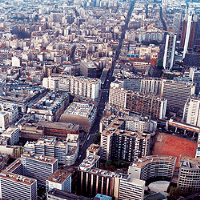
Real estate markets in global cities picked up sooner than their smaller counterparts after the 2008 GFC. This now puts many of them at or near the top of the rental cycle, and London has even started to see rental falls in prime residential and commercial markets. Madrid, having seen rents fall further and faster after 2008, is still on an upward trajectory while Moscow’s rents went over the top of the rental wave after the oil price fall of 2014/15. They have even recovered very slightly in the last six months and seem to have reached a trough.
There is a big gap between the cost of big global cities and most other cities in this study. This means organisations locating in London and Paris will need to find those cities significantly more productive or strategically advantageous for their businesses.
The cessation of rental growth and some downward adjustments could be the start of a re-calibration between costs in the dominant, giant cities and those in the smaller but cheaper ‘second tier’ cities. The global powerhouses will therefore have to maintain or increase their attractiveness to occupiers in order to compete in future. Some European cities will be able to do this on the basis of cost, others on the basis of workforce size and strength. None can afford to be complacent.
Looking forward, the continued success of global cities will depend on young, talented and growing workforces that are able to maintain and increase this productivity. Figure 7 shows the underlying demographic strength of our different cities. We have ranked them strong if they have a large, growing and young workforce and consider that they will be weakened economically by the drag on resources and issues presented by an older, dependent population in future.
What the global cities offer is access to international markets with large, diverse and skilled workforces with the capability of attracting human capital from a global pool. It is this which can offset any local demographic weakness.

.png)
.png)
.png "London")
.png "Moscow")
.png "Paris")