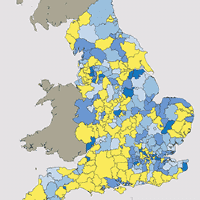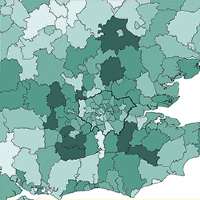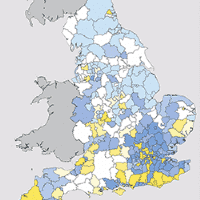
The number of full residential consents reached 293,000 in 2016. This was a 56% increase in annual consents in the four years since the NPPF was introduced. But only 210,000 new homes were completed.
It is widely accepted that to achieve an improvement in affordability, 300,000 new homes are needed in England every year. A core goal of the NPPF was to ensure the planning system delivers sufficient land of the right type in the right places to support growth. It specifies that local plans should take account of market signals and plan to build enough new homes each year to improve housing affordability.
Our analysis of planning consents and housebuilding shows that this goal has not been met. The total number of consents has increased. But there has not been any greater increase in the areas where affordability is most stretched. The distribution of housing delivery and planning consents between areas of different levels of affordability has not changed. This means we are not building enough homes in areas where they are most needed to improve affordability and support economic productivity. The shortfall in consents is more than 90,000 units per year in places where affordability is worse than the national average.
.png)
.jpg)